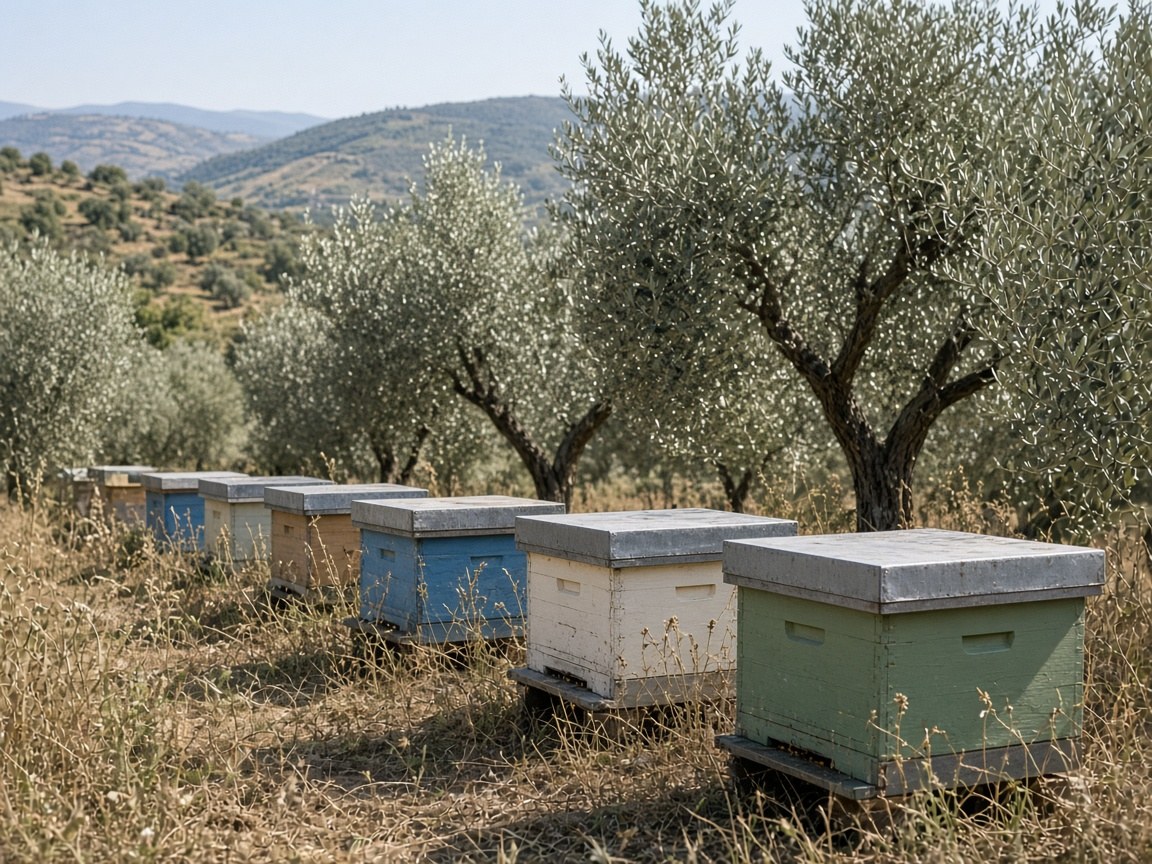
Home terrace
Eighty Langstroth boxes on limestone, windbreak of old carob, wax room under the house. Everything starts and returns here. Hive visits stand on this pad, never in the neighbour's grove.
Home · About
Family yard since 2006Nadav and Mira Tzur moved the first eight hives up from the coastal plain because the ridge still held mixed forage after the groves had finished. The yard grew. The shop did not. We still extract in a lean-to and render comb downstairs.
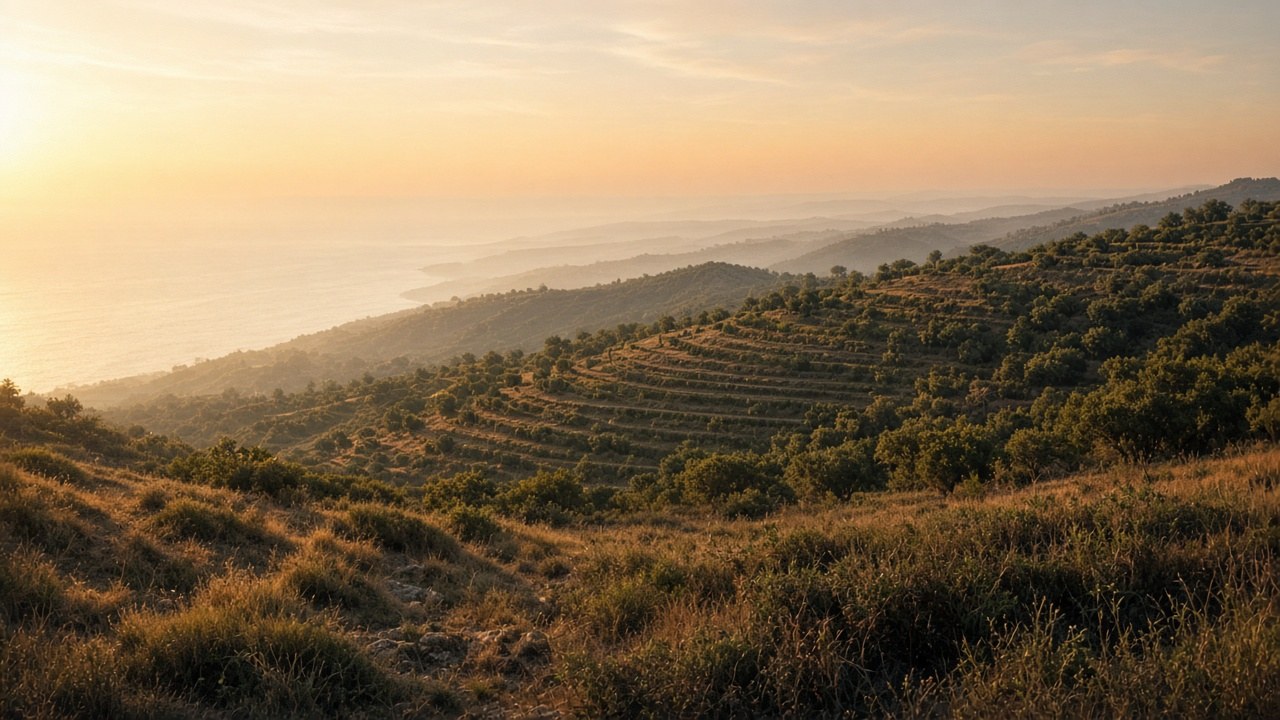
In 2006 the Tzurs leased a wind-cut terrace off HaTamar Street and set boxes where the morning shade lasts until nine. Nadav had kept bees as a sideline in the groves; Mira kept the books and, later, the wax kettles. Their daughter Yael now runs hive mornings and writes the lot cards. Their son Eitan pulls supers in July when the thistle is ready and nobody else wants to wear a veil in that heat.
We sell what the ridge gives. Some years the avocado is a dozen crates. Some years the forest edge runs dark and we bottle it under its own name instead of folding it into wildflower. Visitors who expect a spa, a clinic, or a set lunch are sent politely back down the hill. This is a food farm and an atelier.
Company No. 516441208 is the Israeli private company that holds the yard, the jars, and the wax room. Correspondence goes to 8 HaTamar Street, Zikhron Ya'akov 3091784.

We do not truck hives up the coast. The map below is how the bees actually use the ridge from the home terrace. Distances are flying range, not walking paths.
Eighty Langstroth boxes on limestone, windbreak of old carob, wax room under the house. Everything starts and returns here. Hive visits stand on this pad, never in the neighbour's grove.
January into March. Pale blossom from groves stepping toward the coastal plain. First pull of the year if the nights stay kind.
April. Sage, mustard, and mixed annuals on the open shoulder after winter rain. The jar most people mean when they say “Carmel.”
July. Gold hillside, stubborn heads, darker comb. Slow to extract and worth waiting for the cap.
September avocado on the western steps; autumn forest honey when oak and pine mixed stands toward Ramat HaNadiv run. Short lots. Labelled apart.
“The ridge is not a factory aisle. If the thistle is late, the thistle is late.”
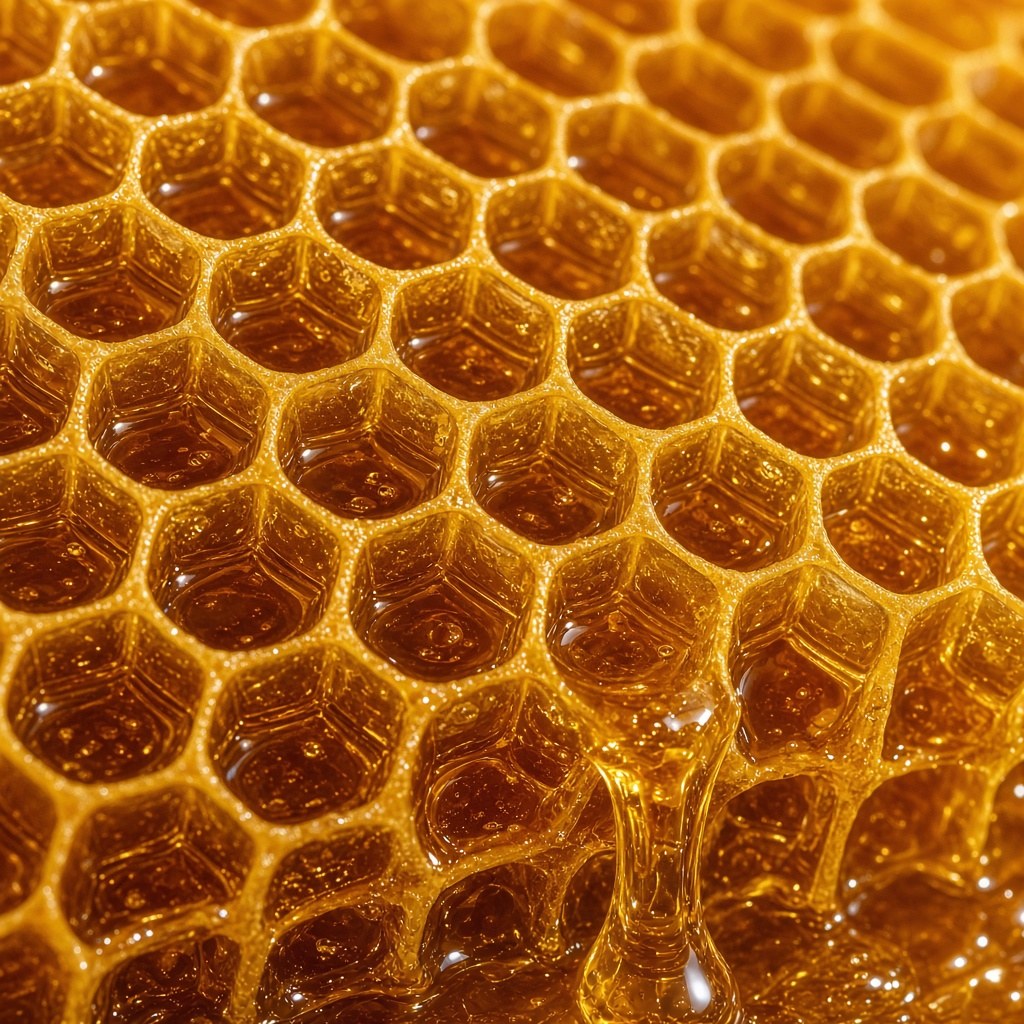
Extraction happens in the lean-to, not in a rented hall. Frames are uncapped with a knife, spun, and the honey is gravity-strained into settling tanks. We do not ultra-filter until the honey looks like syrup from somewhere else. Fine particles of pollen remain because they belong to the bloom, not because we are selling a supplement.
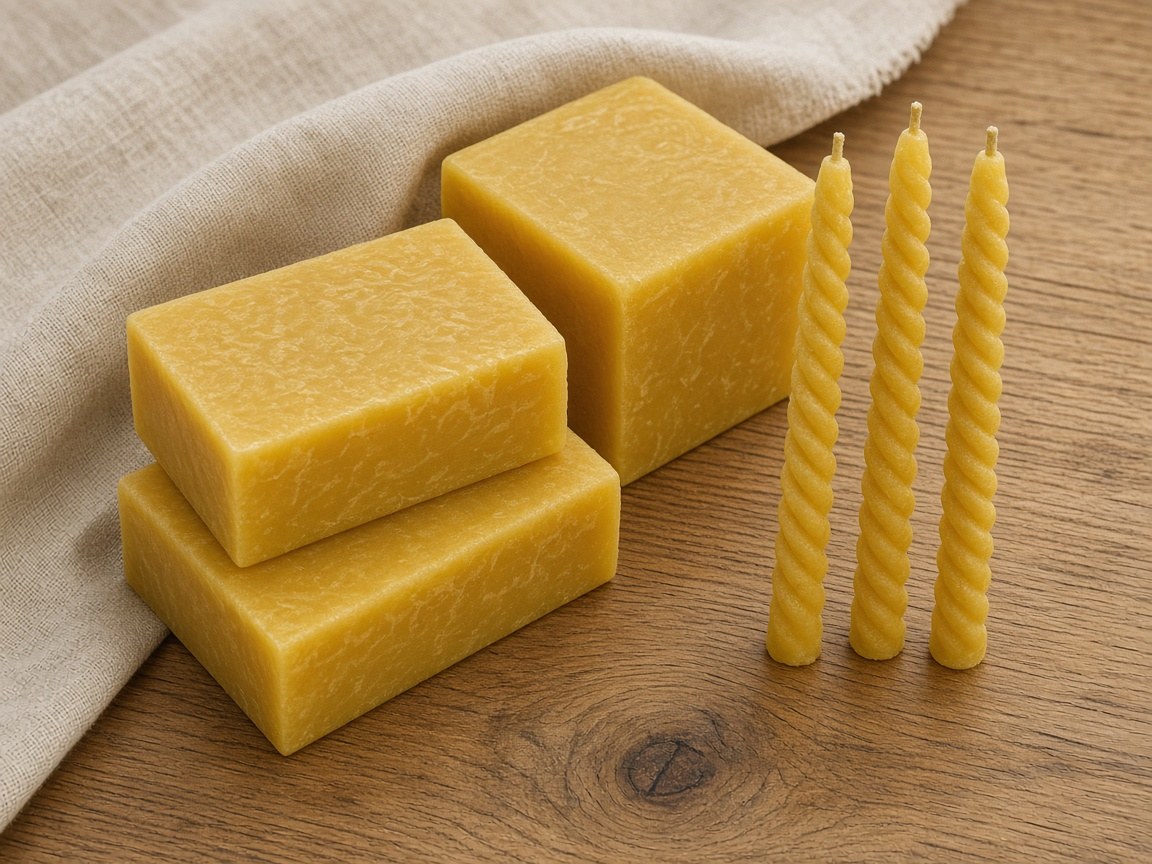
Wax is a second craft, not a sideline slogan. Cappings go to the kettle the same week. Old comb is rendered when a box is reworked. Tapers, wraps and blocks are poured in small batches and dated. If you want medical claims, cosmetics clinics, or pet treats, this is the wrong door.
Eight hives moved up from the plain. First citrus pull bottled for neighbours on HaTamar Street.
The downstairs kettle is installed. Comb stops leaving the property as waste.
We stop selling a generic “mountain honey” and print bloom names on the lot cards.
Yael opens the yard to small appointed groups. Veils on a peg, no unaccompanied children at open boxes.
The wax room sits under the house, cool even in July, with a window that looks onto the carob windbreak. Mira runs the kettle. Cappings from a pull are rinsed, melted, and poured the same week so the wax still smells of the bloom it sealed. Old brood comb is rendered separately; it becomes blocks for makers, not tapers for the table.
Nothing from the hive is treated as a leftover. We do not buy in wax from other yards to bulk a batch. If a season is thin, the taper shelf is thin. Dated batches hang on a pegboard: bloom, kettle week, and whether the wax came from cappings or from reworked frames.
The atelier is not a gift shop with a hive painted on the door. You can order tapers, linen wraps, and plain blocks with a crate of jars. You cannot order a scented line, a cosmetic range, or a “wellness” tin.
Hive mornings are for people who will wear a veil, keep their feet on the pad, and taste four spoons without asking the honey to be a medicine. Neighbours who want a dated crate can skip the boxes and meet us at the lean-to. The ridge does the rest.