January pull
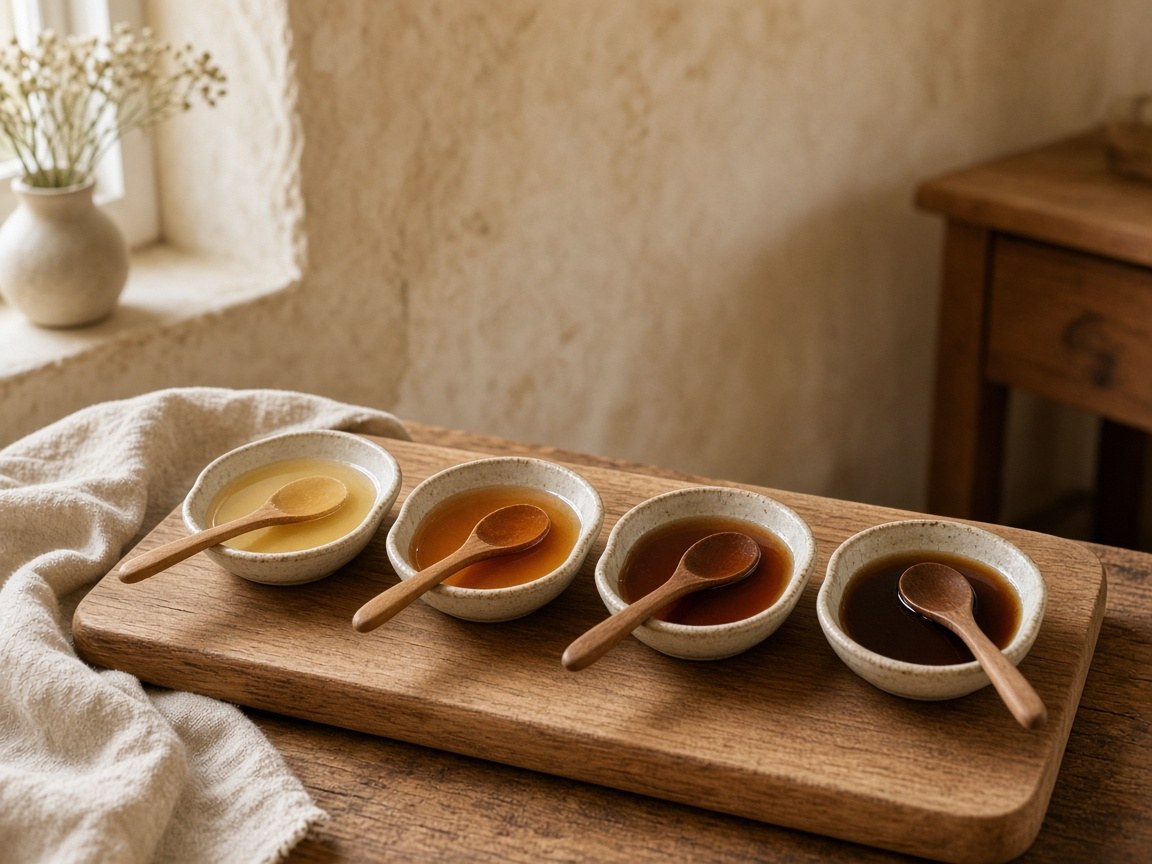
Citrus blossom
Light body, short finish, from groves in the wadi below the terrace. First honey of the year and the one that crystallises into a fine set if you leave it on a cool shelf.
Home · Harvest
Glass, comb, and kettleWe bottle by bloom, not by a house blend. Citrus, wildflower, thistle and avocado leave in dated lots. Forest honey appears when the woodland runs. Beeswax is rendered on the property and poured as tapers, wraps and blocks.
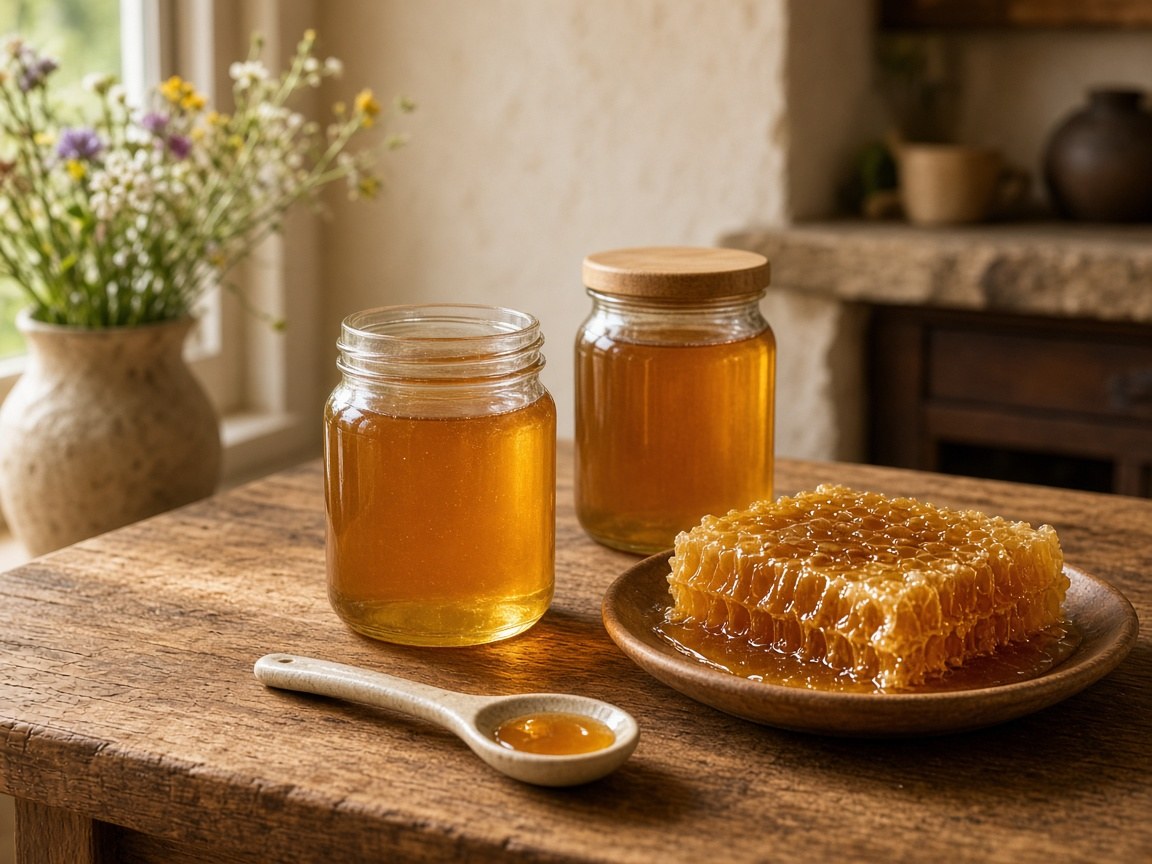
Jars are 250 g and 500 g glass. Labels carry bloom, pull date and hive row. We do not claim medicinal properties, and we do not sell honey as a treatment, tonic or supplement.
Light body, short finish, from groves in the wadi below the terrace. First honey of the year and the one that crystallises into a fine set if you leave it on a cool shelf.
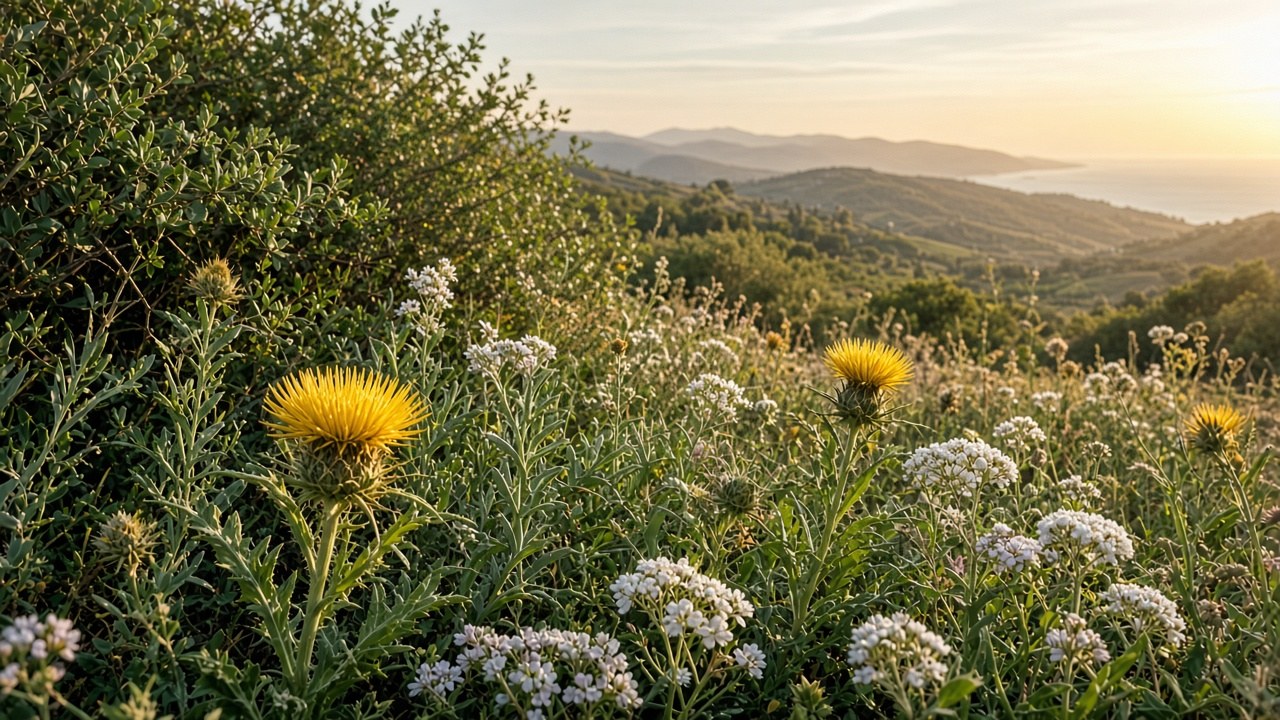
The mixed Carmel: sage, mustard, and the last of the winter annuals. Amber in the jar, a longer nose than citrus. This is the honey we pour first at a flight.
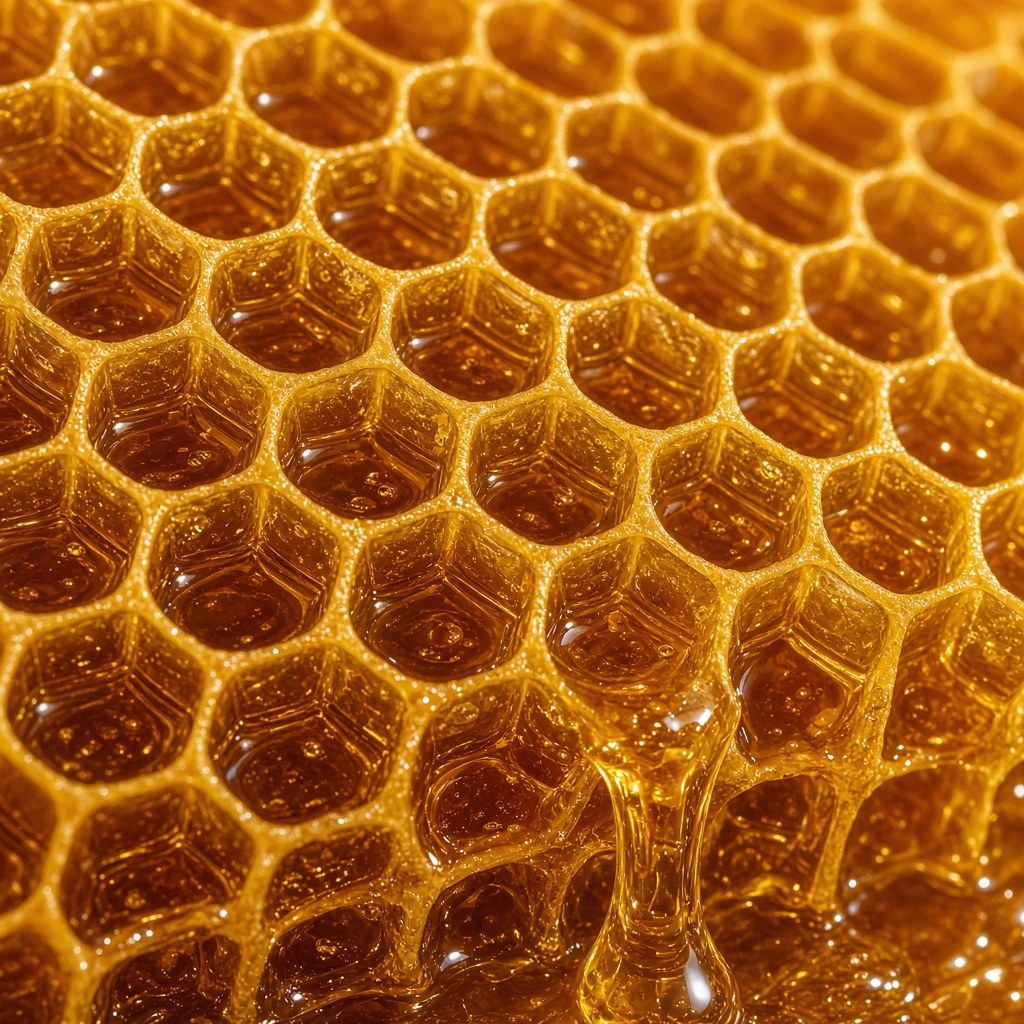
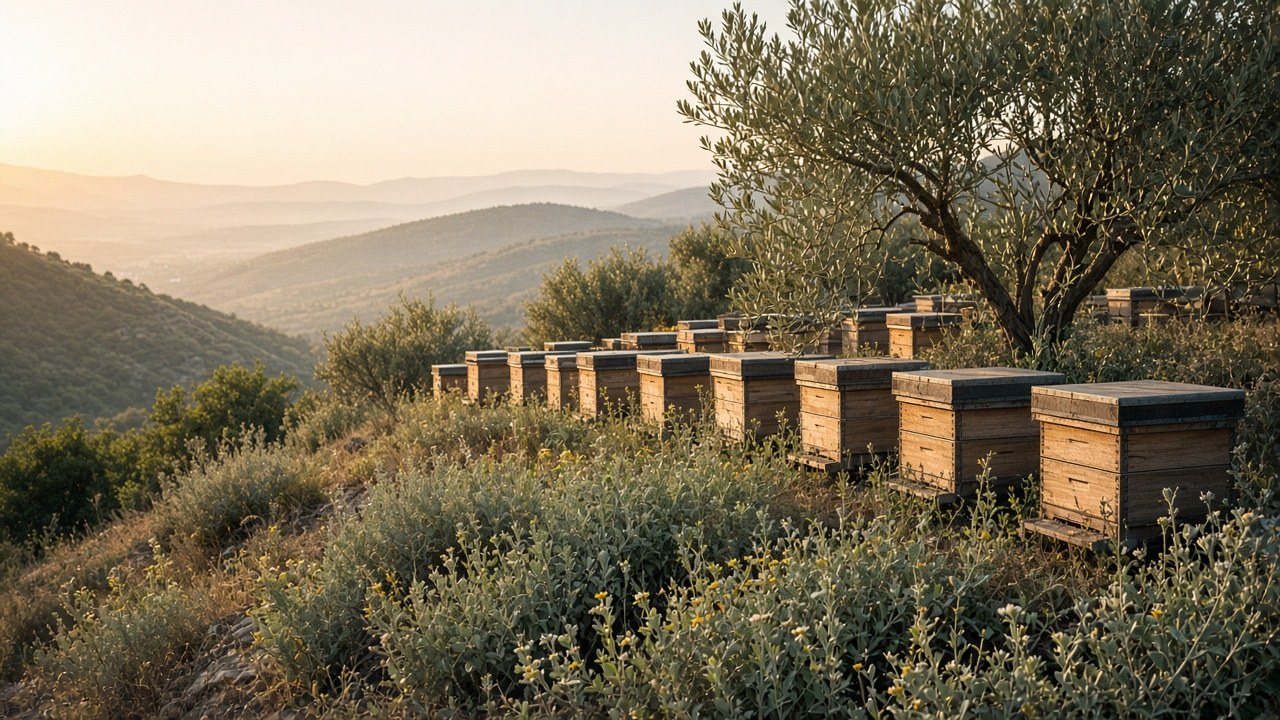
Taken when the slope has gone gold. Fuller colour, slower pour, a flavour that sits. We wait for a full cap; July heat is not an excuse to pull a wet super.
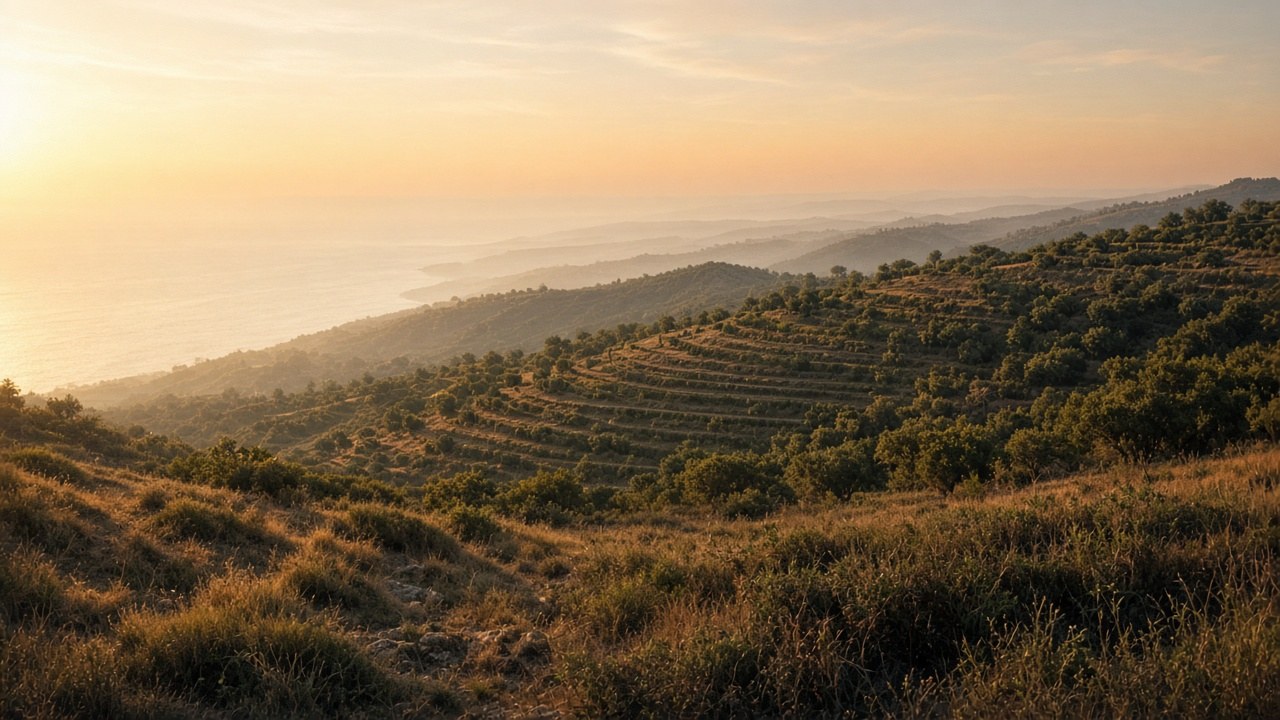
A short western harvest from the terraces. Dark, dense, and gone when it is gone. We do not stretch it with wildflower to make the crate look even.
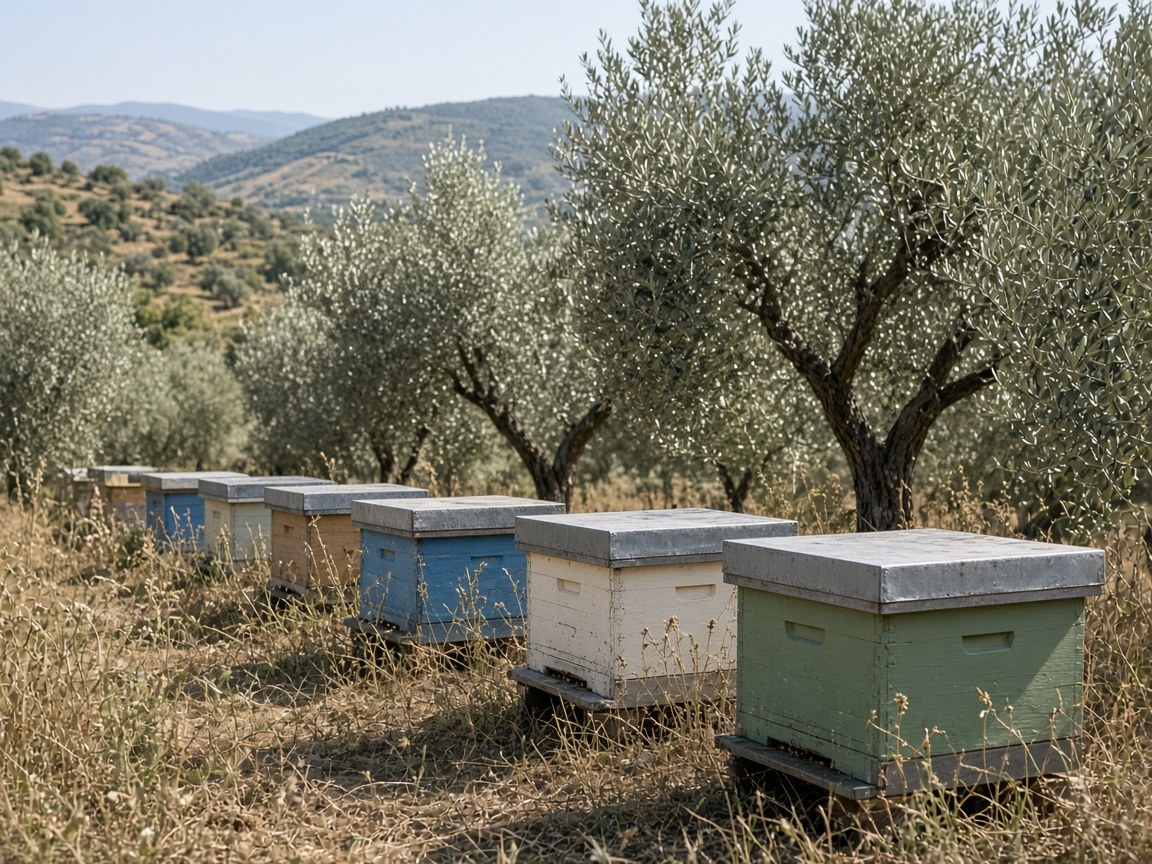
Oak and pine mixed stands toward Ramat HaNadiv. Bottled only in years the woodland actually flows, labelled apart from wildflower, and listed on the lot board in the wax room — never invented for a page.
A house blend would make every crate look the same. We would rather send a short avocado lot than a even-looking jar that no longer belongs to September.
Yael writes the lot cards in the lean-to before a crate leaves the pad. The same three facts go on the glass and in the desk book, so a jar can be walked back to the super it came from.
The forage name as we pulled it: citrus blossom, ridge wildflower, wild thistle, avocado, or forest. We do not print “Carmel gold” or any other shop name that hides the season.
The day the super came off, not the day we found time to jar. A January citrus lot keeps a January date even if it rests in the tank until February.
Which line of boxes on the terrace filled that super. Useful when a grocer asks, and essential if we ever need to find a crate again.
Rendered on the ridge, poured in the downstairs room. Unscented. Dated. Made to be used, not displayed as a mascot.
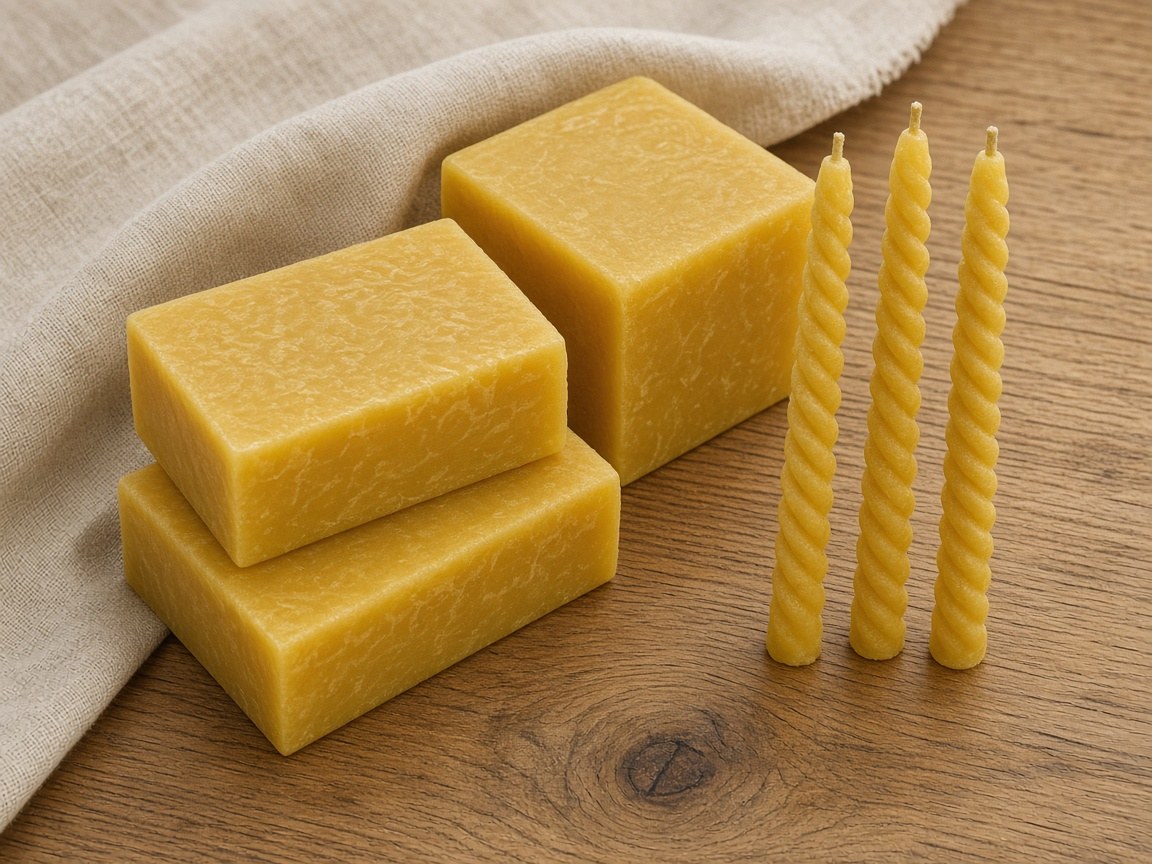
Paired tapers from filtered cappings wax. No added perfume. Burn as a table candle; they are not sold as a therapy.
Linen squares with ridge wax and a food-grade resin. For covering a bowl or wrapping cheese. Wash cool, keep out of the oven. Sold in sets of three: small, bowl, and loaf.
Plain 100 g and 250 g blocks for makers who want uncoloured wax. We also pour a simple furniture polish of wax and oil. Not a cosmetic line, not a lip balm, not a skin cream.
Honey from this ridge is food. Treat it as you would a good jam, not as a medicine cabinet item. Keep the jar in a cupboard away from the kettle steam and the west window. A lid that seals is enough; we do not ship fancy pumps.
Citrus often sets fine and pale. Wildflower and thistle may stay pourable longer, then grain. That is the sugar doing what sugar does in a jar that still holds pollen from the bloom. To loosen a set jar, stand it in a bowl of warm water and stir. Do not boil it on the hob, and do not microwave the glass.
Wax wraps live in a drawer, washed cool, never in the oven. Tapers prefer a draught-free table. Blocks for makers should stay wrapped and out of summer sun on a dashboard.
Household orders and small wholesale for shops in Zikhron Ya'akov and along the Carmel coast. We pack in Israel; we do not run an international web cart from this page. Tell us the bloom, the jar size, and whether you want wax in the same crate. Wholesale is for counters that will leave citrus labelled as citrus — we do not supply anonymous bulk drums.